
As temperatures drop and winter settles in, many rural households turn to trusted, and sometimes older, heating methods to stay warm. Wood stoves, propane heaters, kerosene units, fireplaces, and space heaters are common and often necessary in rural areas, especially where natural gas isn’t available. While these systems can be effective, they also come with serious risks if not managed properly. One of the most dangerous is carbon monoxide (CO) poisoning; a silent, invisible threat that peaks during the winter months.
This season, take time to review heating safety basics to keep your family warm, healthy, and protected.
Understanding Carbon Monoxide: The Invisible Winter Hazard
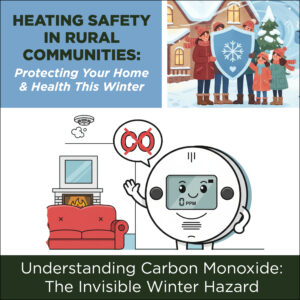
Carbon monoxide is a colorless, odorless gas produced by improperly vented or malfunctioning fuel-burning appliances such as wood stoves, furnaces, fireplaces, and portable heaters. Because CO can’t be seen or smelled, exposure often goes unnoticed until symptoms become severe.
Early symptoms include:
- Headache
- Fatigue
- Dizziness
- Nausea
These signs can easily be mistaken for the flu; making CO poisoning especially dangerous during the colder months when these appliances are in heavy use. High levels of exposure can lead to confusion, loss of consciousness, and even death.
In rural communities, where emergency response times may be longer and heating devices may be older or used more frequently, awareness and prevention are critical.
Heating Safely: Tips for Wood, Propane, and Space Heaters
Whether you heat your home with a wood stove or rely on propane or portable units, simple steps can dramatically reduce risk:
1. Install and Test CO Detectors
Place carbon monoxide detectors on every level of your home, especially near sleeping areas. Test them monthly and replace batteries regularly. If your detector ever sounds, get outside immediately and call 911.
2. Maintain Your Heating Equipment
Have chimneys, vents, furnaces, and wood stoves inspected and cleaned annually. Creosote buildup and blocked ventilation are major causes of CO exposure.
3. Use Space Heaters Properly
Keep any portable heater at least three feet from furniture, bedding, and curtains. Never use ovens or grills to heat your home.
4. Ensure Proper Ventilation
Always operate generators outdoors; never in a garage, barn, or enclosed porch. When using wood stoves or fireplaces, make sure flues and dampers are open and vents are clear.
5. Store and Use Fuel Safely
Only use the recommended fuel type for your heater. Never refill kerosene or propane heaters indoors.
Know When to Seek Medical Help
If you or someone in your home experiences symptoms of CO exposure, especially if multiple people feel ill at the same time, treat it as an emergency. Leave the home immediately and call 911 or your local emergency department.
Staying Warm, Staying Safe
Winter in a rural community brings beauty, tradition, and time with loved ones, but also adds risks when it comes to heating your home. By taking a few extra precautions, installing CO detectors, and maintaining your equipment, you can enjoy a warm, safe, and healthy winter season.
Your safety is our priority. Stay warm, stay vigilant, and stay healthy this winter.